

Milton S. Hershey – The Early Years
Central Pennsylvania in the mid-1800s was a landscape of farmland stretching for miles, with Horseshoe Pike, today’s Route 322, serving as the main road for farmers hauling their wagons west to Harrisburg or east to Philadelphia. It was in this rural world, on September 13, 1857, in Derry Township, that Milton Snavely Hershey was born. The son of Swiss and German immigrants, he grew up in a Mennonite community speaking the “Pennsylvania Dutch” dialect.
Milton’s mother, Veronica “Fanny” Snavely Hershey, was a devout member of the Reformed Mennonite Church who instilled in her son the values of hard work and resourcefulness. His father, Henry Hershey, was a dreamer who pursued one venture after another, though none brought financial success. Their marriage was troubled, especially after the loss of Milton’s younger sister Sarena, and the family life was far from stable. Yet, throughout Milton’s career, you can see his mother’s strong-minded determination and his father’s big dreams shaping the man he became and his future success.
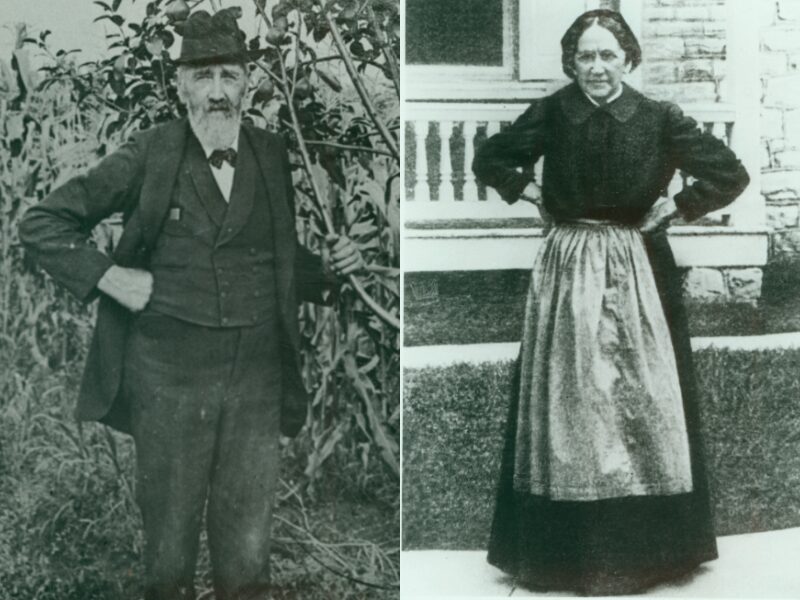
Milton Hershey’s Parents, Henry and Fanny
One of Milton’s earliest memories happened during the Civil War. In the summer of 1863, while the Battle of Gettysburg raged to the south, rumors spread that the Union Army had been defeated and that Confederate soldiers would soon be marching through Harrisburg. Milton recalled listening to this tense conversation around the table and deciding to bury the small stash of coins he saved in a tin can in the garden for safekeeping. The Confederate Army never came, but young Milton never found that money again, even after digging up the garden searching for it.
Milton S. Hershey’s Education and Apprenticeship
Milton’s formal education was brief and fragmented. Children in rural Pennsylvania often attended small, one-room schoolhouses, balancing lessons with farm work, and Milton’s childhood was no exception. Because his family moved frequently and education laws were non-existent, Milton attended an estimated seven to nine different schools, never progressing beyond what we would consider the fourth grade.
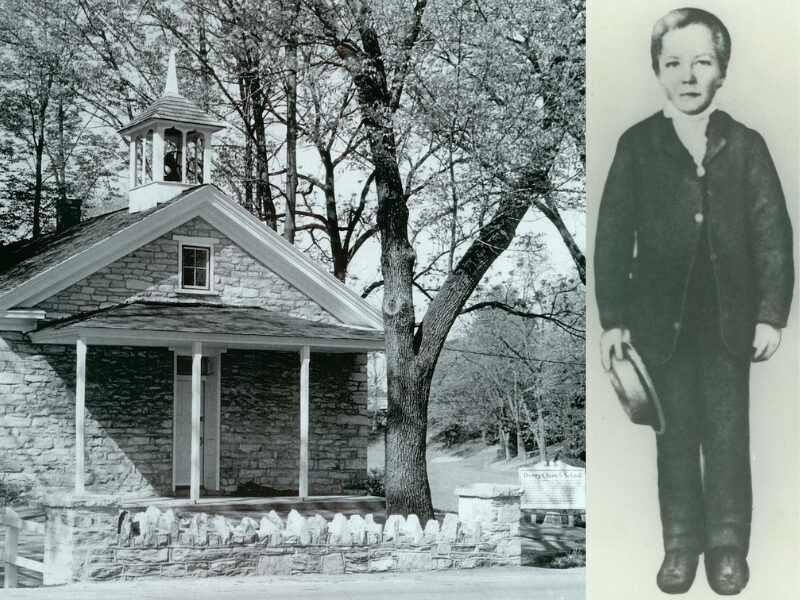
One of Milton Hershey’s schools, the Derry Church Schoolhouse
As Milton entered his teenage years, his parents decided it was time for him to learn a trade. Apprenticeships were beginning to decline in popularity with the rise of Industrialization, but in 1871, Henry secured his son a position with a local printer. The job, however, was short-lived. Milton hated the work, and after just a few months, he “accidentally on purpose” let a hat slip into the printing press, promptly ending his employment. It was his mother, Fanny, who then stepped in and arranged an apprenticeship with Joseph Royer, a confectioner in Lancaster. This time, Milton found his passion. The work was demanding, but Royer’s learning-by-doing teaching style resonated with Milton and eventually became the cornerstone of our Deed of Trust. At Royer’s shop, Milton experimented with recipes and ingredients, developing the skills and curiosity that would later fuel his success. By 1876, with Milton coming of age and the Centennial celebration in Philadelphia, he finally felt ready to strike out on his own.
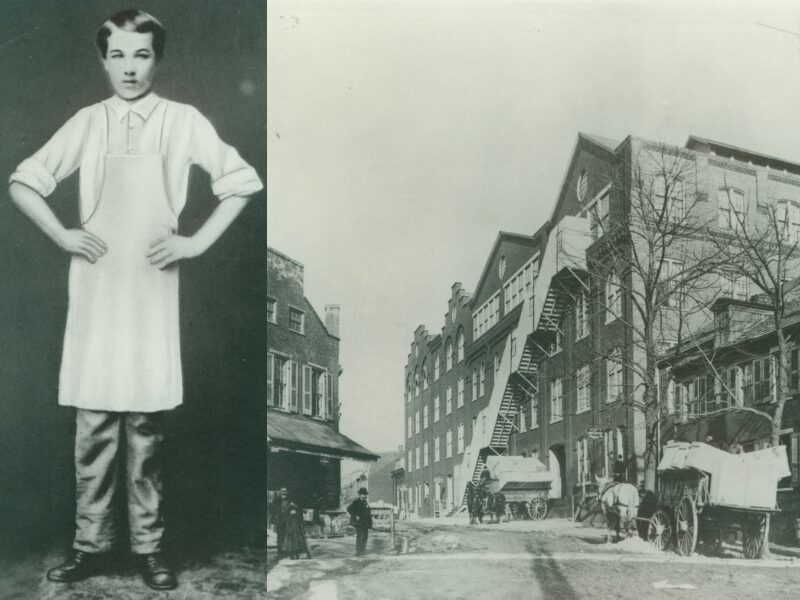
Teenaged Milton Hershey and his apprenticeship in Lancaster, PA
Looking back, it is clear how these early experiences shaped Milton’s vision and his love for working in the confectionery business. The lack of stability at home, limited education, and hardships he faced as a boy all planted the seed for a school where children, like himself, could receive a good education, have a stable home, and get a chance for a better future.
Learn More About Milton S. Hershey